Dum & Dummer


photos by gluttonforlife

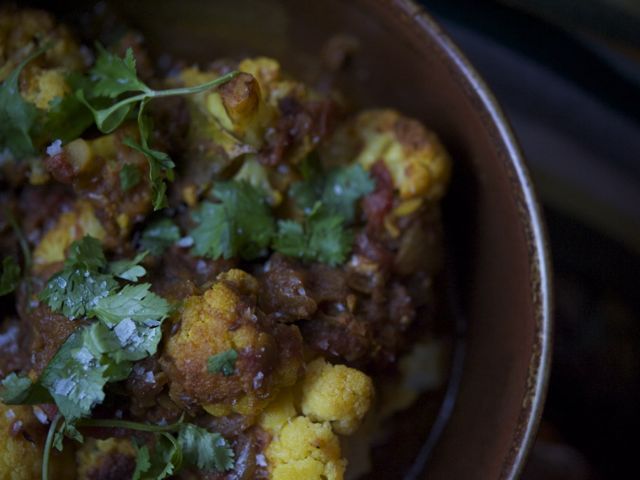
I’m sure it will come as no surprise to you that the firm white head of the cauliflower is referred to as “the white curd,” for it looks like nothing so much as a big virginal cheese. Of course it comes in other colors—orange, green, even purple—but it is the white that is the most common, the most classic and perhaps the most invitingly pristine. It’s lovely baked with cheese sauce, pureed into a creamy soup or steamed whole and dressed with a caper vinaigrette and toasted breadcrumbs, but it’s also a rather surprisingly capable foil to far more assertive flavors. This Indian “dum,” a type of steaming done in a tightly sealed pot, traditionally over a wood or charcoal fire, transforms the cauliflower into a velvety heap cloaked in a fragrant and highly-spiced sauce. You can make a simple meal of it along with a pile of nutty basmati rice, or serve it as part of a larger repast with braised lamb or grilled chicken. Either way, it’s certainly no wallflower.


Read the rest of this entry »

Proceed Gingerly


photos by gluttonforlife

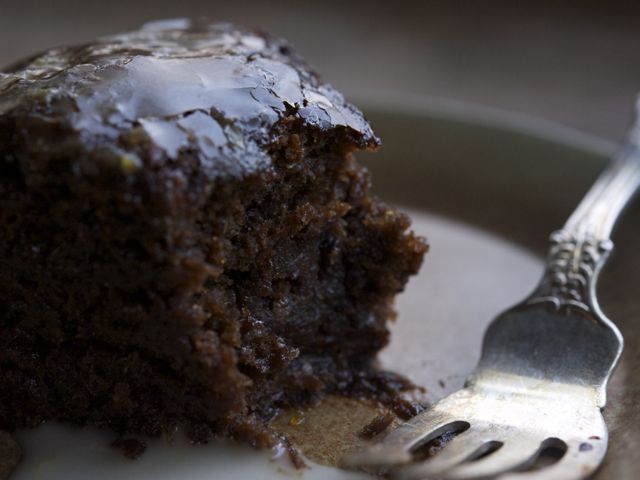
Ever get a craving you just can’t shake? A couple of weeks ago, I began dreaming of gingerbread: dense and dark, with chewy edges and chunks of crystallized ginger. The cakey kind, not the drier, more brittle sort used for gingerbread men and their over-decorated houses. I’m partial to a tangy lemon glaze on mine. The crackle finish it makes on top and the way it seeps into the crumb is simply irresistible. You don’t need anything else with this gingerbread—no whipped cream, no ice cream, no applesauce—just a nice strong cup of tea. I don’t recommend it after a hearty stew or pasta, you’ll feel too leaden. It’s the perfect cold-weather breakfast, lazy afternoon snack or highly anticipated finish to a light dinner.

Read the rest of this entry »

Chai Wallah


photos by gluttonforlife

I would so love it if I had a fabulous little chai wallah to come around every morning bringing me tea. I got pretty spoiled on my honeymoon in India, especially when we were staying at Aman-i-Khás in Rajasthan, on the edge of the Ranthambore National Park. We went on safari every morning, setting out before dawn in open Land Rovers in the hope of glimpsing a tiger. In the frigid dark we would be handed hot water bottles and camel’s hair blankets, and upon our return, in the stone patio now flooded with sunlight, we were greeted with steaming cups of masala chai. (For a more in-depth explanation of chai, visit an earlier post, here.) I’m writing about it again now because this is the time of year I really begin to crave it. It’s full of such a wonderfully warming mix of spices and if you make your own, you can customize a blend that emphasizes what you love best. In India, masala chai is made with strong black tea and assertive spices like clove, fennel, ginger and pepper. The Kashmiri version is made with green tea and often includes more subtle flavors like almond, cardamom and saffron. I’m enjoying mine so much these days thanks to the raw cow’s milk I brought back from Vermont, but it also tastes delicious with almond or hemp milk.


Read the rest of this entry »

Winos


photos by gluttonforlife

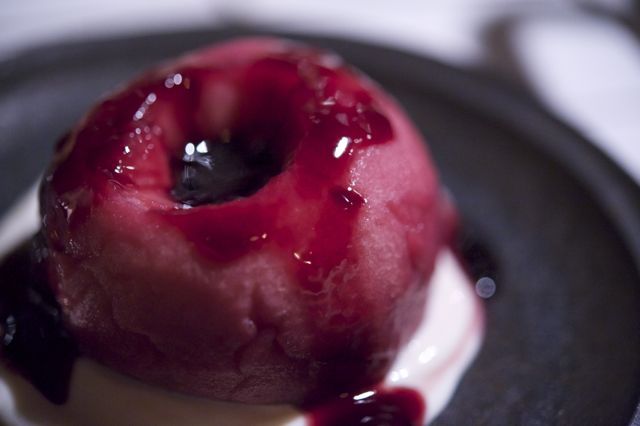
The season of eating is here. Not that we don’t eat all year long, duh, but you know what I mean. The holiday lunches, the cocktail hours, the office parties, the extended family feasts—all lined up in a sticky, fatty, calorie-laden row stretching out until New Year’s Eve, when it comes to a close with one final champagne-fueled blow-out. And then? Remorse and penance. Juice fasts. Salad. Guilt-induced exercise binges. More salad. And still, visions of sugarplums dance in your head. We know that moderation is an option. We’ve all read those “how to handle the holidays without packing on the pounds” articles. Stick with wine spritzers and vodka on the rocks. Choose the celery sticks over the chips. We know the drill. These are truly first world problems. So let me present you with one first world solution. A dessert so beautiful and festive it’s worthy of your fanciest dinner table, yet so low in fat and calories you can enjoy it without a second thought. Because between stressing over whether the roast is overdone and wondering if your sister is going to kill her husband right then and there, you’ve got enough on your mind without having to worry about a case of gout, right?


Read the rest of this entry »

Black Butter


photos by gluttonforlife

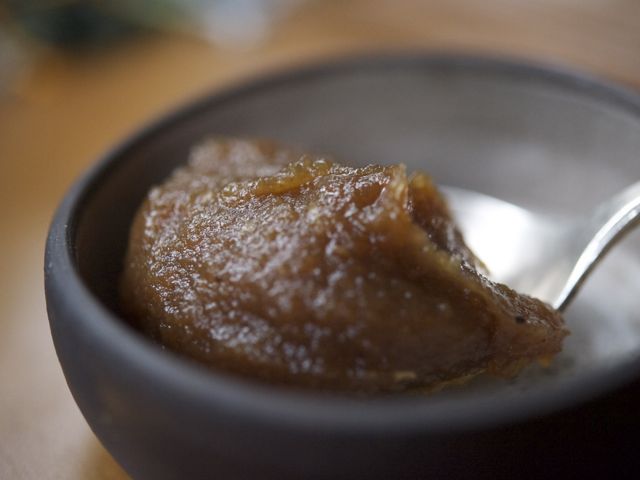
Torrential rains accompanied by great gusts of wind have brought many of the fall leaves cascading down in whirling colors. Now the birds are more visible, darting around, and you can see the squirrels—red and grey—perched on branches, nibbling pinecones like corn on the cob. The apples stand out like ornaments on the trees, tempting the deer, which are gorging themselves silly on the sweet fruit. We went back to Julia‘s ancient orchard to harvest a few more; I wish I knew what they are—2 green and 2 red, heirloom varieties for sure, each more delicious than the next. I decided to cook down their wonderful, winey essence into that most traditional of all preserves: apple butter. It’s essentially just a highly concentrated form of apple sauce, produced by long, slow cooking of apples with cider or water to a point where the sugar in the apples caramelizes, turning the rich stew a deep brown. There’s no actual butter involved in the product; the term refers only to the thick, soft consistency, and its use as a spread for breads. Read the rest of this entry »

Meaty Monday: Lamb Vindaloo


photos by gluttonforlife

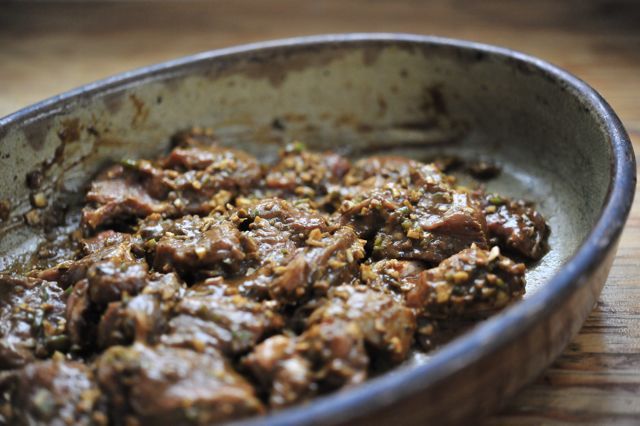
I arose this morning to the deep silence of new-fallen snow, a world blanketed white. Today is a holiday. An opportunity to putter about guilt-free, reading yesterday’s paper, enjoying a leisurely cup of chai. Thoughts turn to the cubes of lamb I pulled from the freezer to defrost overnight. Something warming is in order, a comforting braise of some sort, but nothing that requires too much work. Perhaps a spicy vindaloo is just the thing. It can marinate for hours, and then G can stir it on the stovetop while I’m at yoga this evening. A group effort, and yet not much effort at all. Brown rice, sauteed spinach and a little raita. That’s dinner on this Meaty Monday. A day off for you might mean ordering in, but it’s actually much more indulgent to inhale the wonderful smells of aromatics and spices, knowing that a delicious curry is in your future.


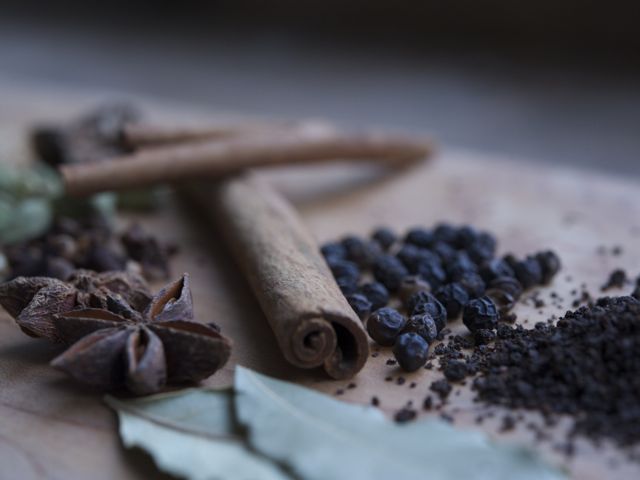
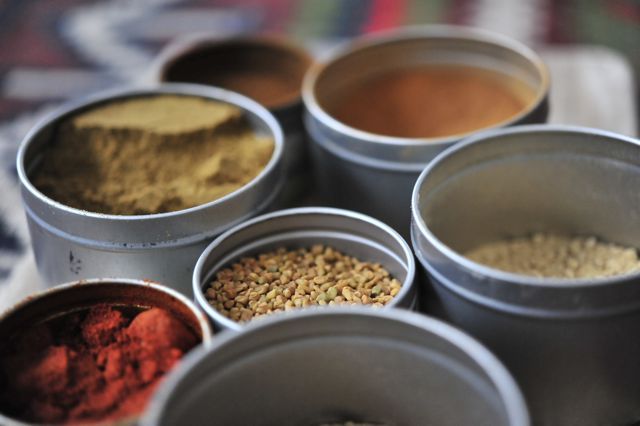
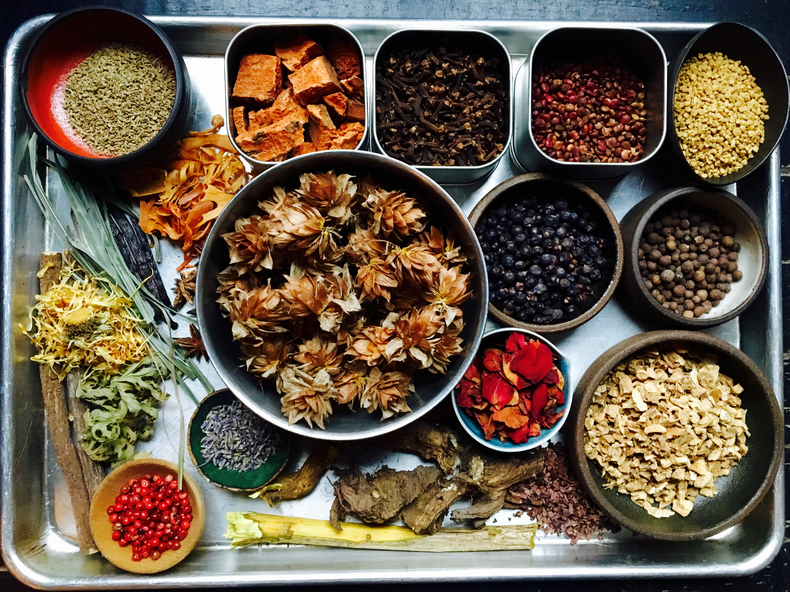
i love the earthy palette of these fragrant spices

Read the rest of this entry »

Condimental: Nose-to-Tail Chutney


photos by gluttonforlife

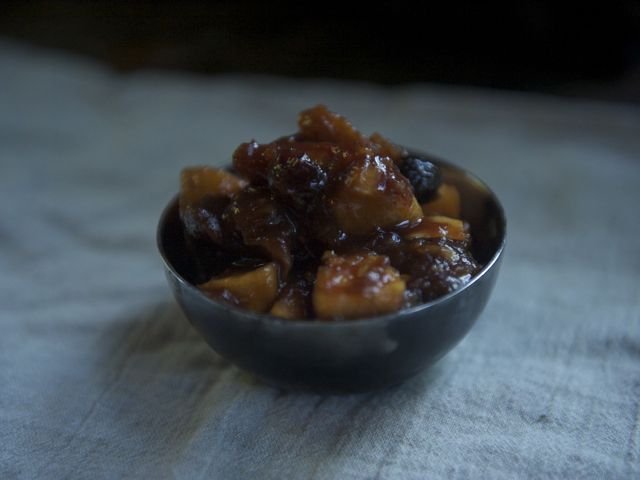
Scared you, didn’t I? You thought this was going to be about some weird condiment made with offal. This chutney is definitely assertive in its own right, but it is strictly vegetarian. It is, however, from the original nose-to-tail chef, Fergus Henderson of St. John in London. I’ve never met Fergus, nor have I eaten in any of his restaurants, but I love the man. His seminal cookbook, Nose to Tail Eating: A Kind of British Cooking, is a window into his wonderfully warm, witty and ultimately quite sensible approach to food and life. (Did I mention he has Parkinsons?) You’ve never seen a less fussy cookbook. He doesn’t get all bothered about quantities or times, but rather helps you to be an intuitive cook. Some choice phrases: “Do not be afraid of cooking, as your ingredients will know and misbehave.” (As though an onion was a young horse feeling its oats!) Eating aoli “should be an emotional experience.” And, with regard to this chutney, “There is nothing finer, after having a good stock up your sleeve, than having a reserve of chutney.” I believe we’ve conquered the stock thing, and so are ready to proceed to this very British, quite rustic and highly addictive chutney.


Read the rest of this entry »

Condimental: Spice Girl


photo by george billard

If you’ve ever been out for Japanese food (not just sushi, but maybe soba or yakitori or hot pots), you may have noticed a little red shaker on the condiment tray. That’s shichimi togarashi, a Japanese spice blend traditionally eaten on noodles, soups and stews. It’s made from a combination of seven spices (shichi means seven in Japanese), most commonly ground red chili pepper, dried orange peel, black sesame, white sesame, ginger, ground sansho, and nori flakes or powder. You’ll often also see a little green shaker alongside, and that’s just plain sansho, a berry from the prickly ash tree that is a relative of the Sichuan peppercorn. It has that same peppery-piney flavor that leaves a slight tingle on the tongue. You can find both these condiments at any Japanese market, or online at Japanese food specialty sites. Read the rest of this entry »

Rise & Shine


chai


Fresh juice is a great way to start the day. You’ve probably already read my proselytizing about the many benefits of ingesting live, vital vegetable and fruit juices. (Quick primer: you get energy, antioxidants, digestive health, clear skin.) But on these frigid days, something warming does seem in order. I’m not a coffee drinker, never have been, though I do enjoy the occasional cup (especially as a vehicle for cream and sugar), but I am partial to chai. Actually, chai simply means tea. It derives from cha, the Chinese word for tea. What I’m really talking about here is masala chai—masala being an Indian word for spice blend. In India, masala chai is drunk like we drink coffee. It’s sold on the streets by chaiwallahs (and I think you all know what that is, having sat through Slumdog Millionaire.) Instant chai is available, but it tends to be loaded with sugar and fake flavorings. I’ve been known to order a soy chai latte from Starbuck’s (oh, the shame) and the best I can say about it is that it’s not very authentic. One prepared version I do like is from the venerable French tea company, Mariage Freres, called Chandernagor after the former French colony north of Kolkata (Calcutta). It’s a classic blend of black tea with cinnamon, cloves, ginger, green cardamom and black pepper. Sometimes chai will also include ajwain, a pungent relative of caraway; allspice; coriander; bittersweet chocolate; fennel, star anise or licorice root; nutmeg; and vanilla. My favorite tea to use in a chai blend is an Assam, whose assertive taste and slight smokiness can stand up to all the spices. Rooibos tea makes a pretty good caffeine-free alternative. Why not make your own masala chai blend in quantity and store it in a jar or tin? Then you can simply steep it in a combination of milk (cow, goat, soy) and water, adding whatever sweetener you like. I use honey, but sugar, agave nectar or even sweetened condensed milk work well. The spices really enhance the warming effect, and are a great way to get your blood moving on these cold winter mornings. Read the rest of this entry »

Such a Dal


pilgrimphoto by george billard

You may have seen Mark Bittman’s piece about eating legumes in the Times last week. He provided some excellent and simple recipes, like spiced red lentil dal, and mung bean dal with apples and coconut. He talked about the typical Indian way of finishing these dishes by stirring in an extra flavor booster—cream, butter, fried onions or nuts. (Apparently this is called a “tarka.”) It reminded me of a dish I was obsessed with during our visit to India, a thick and spicy stew of black lentils enriched with cream. I first had it in Jaipur, that magical city of bazaars and bangles and precious stones and yellow marigolds. We were staying at the Oberoi Rajvilas, one of the world’s most outstanding hotels. Peacocks roamed the grounds outside our luxurious “tent,” and one night we collapsed into our enormous, pillowy bed to watch “Ghandi” and eat room service. What arrived was this incredible daal makhani, fragrant with ginger and chile, rich with ghee.


Read the rest of this entry »

Newer  1 2  Older