




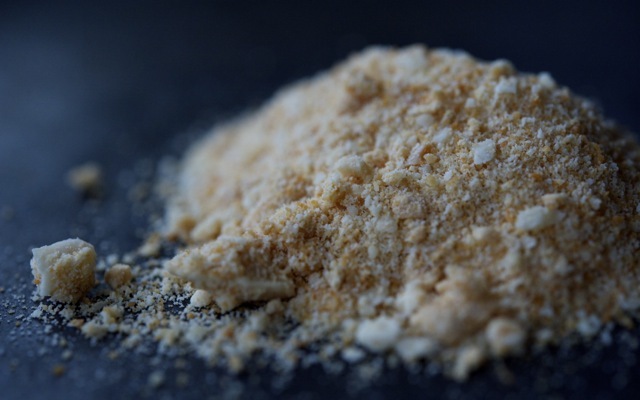
Spring has sprung. Out my window, however, winter is still having a party. A thick layer of snow covers any tentative signs of growth, making me doubly glad that we're headed to Antigua. Sun, sand and surf? Yes, please. In the week before I go on vacation, deadlines are piled precariously high and the to-do list stretches to the horizon. But, come Saturday, I will be on that plane. In the meantime, a short but very savory post for you about the glories of making your own cheese powder. Nacho Libre, indeed.
Read More...


Twitter @glutton4life
11.8.11 Consider This
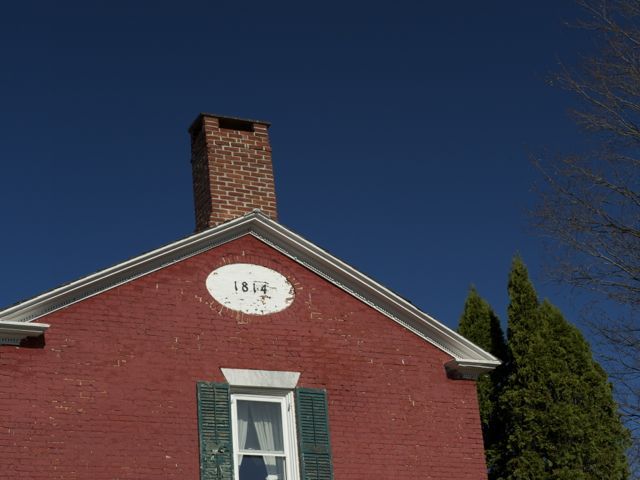
This past weekend's journey upstate toward the Vermont border yielded not only a lesson in black Angus cattle, but two gallons of raw cow's milk, some irresistible cider donuts and a couple of award-winning cheeses from the very beautiful Consider Bardwell Farm. (Those of you who have been reading this blog for a while may remember a mention of their cheeses way back when.) The 300-acre farm was founded in 1864 by the fortuitously named Consider Stebbins Bardwell, and became the the first cheese-making co-op in Vermont. Now owned by Angela Miller, literary agent to some of our most beloved culinary writers; her British husband, architect Russell Glover; Chris Gray; and master cheesemaker Peter Dixon, Consider Bardwell Farm makes cheese with the milk from its own herd of 100 Oberhasli (Swiss Alpine) goats and from neighboring farmer Lisa Kaimen's herd of 30 Jersey cows. Rotational grazing on pesticide- and fertilizer-free pastures guarantees sweet, nutrient-rich milk that is also antibiotic- and hormone-free. The farm's 6 cheeses are made by hand in small batches and aged on the grounds. No surprise, then, that they have repeatedly won awards at important cheese competitions here and abroad. All this to say, emphatically, Consider Bardwell's cheeses are divine.
Read More...
Read More...
7.19.11 Say Cheese
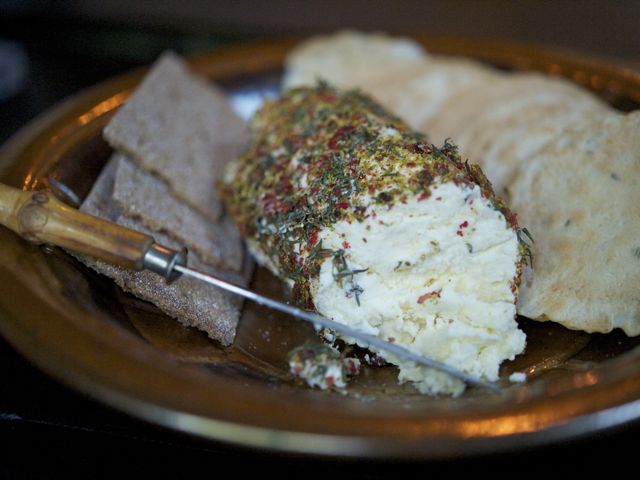
I think I've already mentioned Julia Moskin's D.I.Y Cooking Handbook for the New York Times online right? It's where I got inspired to make vin d'orange. (Which turned out great, incidentally.) She's got a bunch of useful recipes there, including a few that overlap with some of mine. Like one for making your own ketchup; and preserving lemons; and this one for making your own fresh cream cheese. Hers is a slightly shorter process because she uses rennet, which causes your milk to curdle right away. I learned my technique from Nourishing Traditions, where you simply let milk sit out on the counter for a few days until it curdles on its own. Actually, some good bacteria helps it along. You separate the curds from the whey (reserving the latter for making pickles and sauerkraut, and stirring into soups and smoothies), then drain the curds so they come together in a light, creamy cheese. It's kind of magical.
Read More...
Read More...
7.13.11 Raw Deal
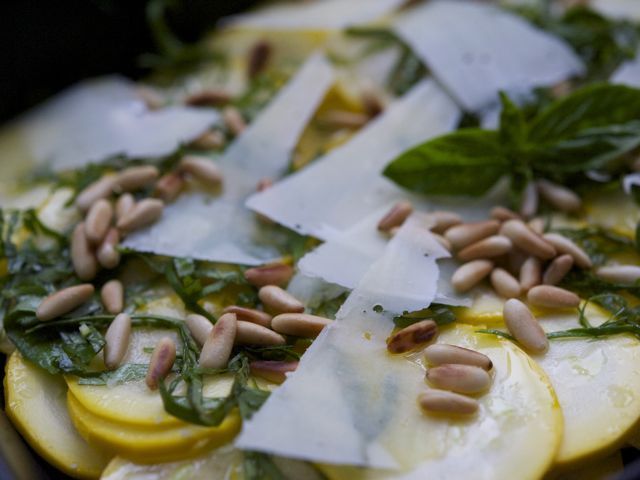
Can't stand the heat? Get out of the kitchen. But if you live in the complete sticks, where restaurants and take-out are really not an option, the kitchen is where you ultimately wind up when you feel hungry. The solution is often the grill, or you can abandon fire altogether and opt for cold leftovers, chilled soup, composed salads or even ceviche. But if you happen upon some screaming yellow zucchini and are looking for an easy supper, here's something that's all inspiration and no perspiration. In addition to the squash, you'll need a knife, pine nuts, basil, parmesan, a lemon and some good olive oil. Leave your hearty appetite at the door. This is a light repast for those summer evenings when you're feeling like a cat on hot tin roof. If you're still hungry, eat a pint of ice cream...
Read More...
Read More...
6.13.11 Meaty Monday: True Grits 2.0
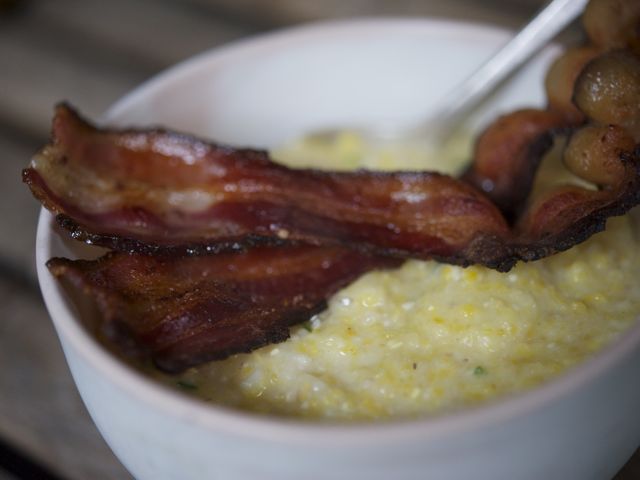
Bacon for breakfast is a treat. Not an everyday thing, but especially welcome when there's a day of gardening ahead, or something more strenuous than sitting in front of the computer. Crisp, smoky, salty, sweet and finger-lickin' good, bacon is damn near irresistible. (Especially if you know for a fact that it doesn't come from a pig raised in misery on a feed lot.) And boy does it go well with corn. Corn, bacon and avocado salad. Corn pudding with bacon. Cornbread with crispy pork cracklings. After last week's rather esoteric grits posting that involved draining and drying your grits before eating, I thought it might be a good idea to share a recipe that's a little less involved. I was ordering buckwheat and brown rice flours from Anson Mills to do some gluten-free baking, and I also picked up a bag of their coarse-ground Pencil Cob brits—so-called for the very slim corn cob. I simply boiled them with water, stirred in a little cream, some sharp cheddar and a handful of minced jalapeño and there was breakfast. A couple of slices of bacon fried to perfection and it became a breakfast of champions. So if you were daunted by my purple Forbidden Rice grits, these should send you racing to the stove.
Read More...
Read More...

2.2.11 Rabbit, Run
Happy Chinese New Year! It's the year of the rabbit, which happens to be my year. Those born under this sign are said to be extremely lucky, articulate, talented, ambitious and have excellent taste. We are admired, trusted and tend to be financially fortunate. Though fond of gossip, we are tactful and generally kind. Ahem. Evidently, a rabbit year brings peace after the ferocious and demanding year of the tiger. I've never understood why people referred to "the man in the moon," when it is so clearly a rabbit. The Chinese see the Moon Hare standing near a rock under a cassia tree, holding the Elixir of Immortality in its paws. Check it out next time the moon is full; the ears are unmistakable.
Read More...
Read More...
10.13.10 Pumpkinship
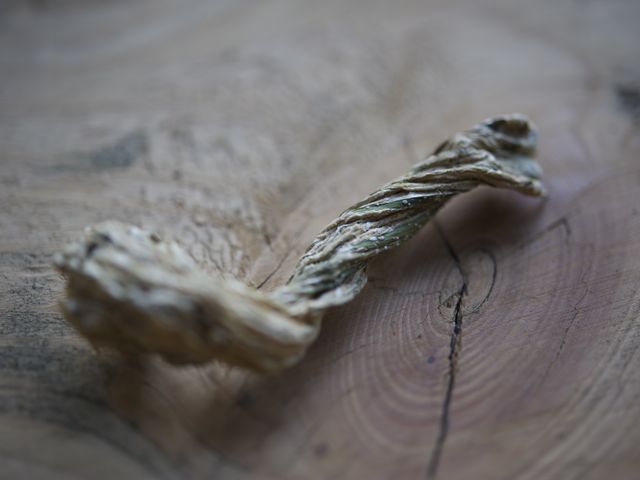
I was struck by how much this pumpkin stem reminded me of an umbilical cord. Which, in fact, it is. Through this ropey connection, now so beautifully gnarled and withered, the plant takes life from a root ball that is essentially the placenta. And the resulting pumpkin? A baby, of course! Chubby cheeked and ruddy, with sweet, tender flesh. The comparison goes South when you consider the tough exterior—this baby means business. Hardy enough to spend the cold months solo down in your root cellar (or most any consistently cool, dry place), pumpkins are a great sort of sustenance during the winter. They can go sweet or savory: custard, ice cream, quickbread, ravioli, risotto...they are endlessly adaptable. At a recent lunch, the discussion had already turned to Thanksgiving recipes, so I want to make sure you consider my favorite pumpkin custard with candied pumpkin seeds and gingered crème fraîche as a candidate for your holiday dessert. It's foolproof, can be made ahead, and I've never heard anyone complain about the lack of crust (usually sodden anyway).
Read More...
Read More...
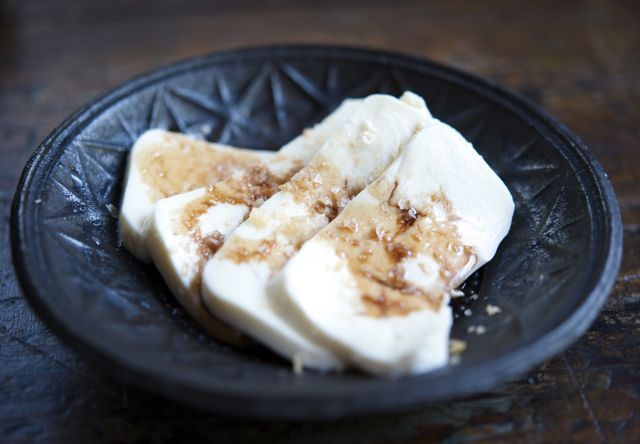
photo by george billard
6.28.10 Artisanal Cheese
G and I signed up for a mozzarella-making class at Artisanal, the center for all things cheese, located on the West side in Manhattan. It was originally an offshoot of Terrance Brennan's restaurant of the same name, though I'm not sure the two are still affiliated. At any rate, they have state-of-the-art cheese caves there and a staff of knowledgeable affineurs (cheese "agers") and educators, and a fun range of classes. We took a cheese & honey pairing class there last year that put a bee on our bonnet about raising our own bees...but that's another story. Now that I'm all up on curds and whey, what with making my own fresh cheese and all, I thought the next logical step would be making my own mozzarella. Somehow I thought we would be starting from scratch—with fresh milk and some rennet. But it turns out that making curds is a rather more involved process than they want to take a classful of cheese novices through in a 2-hour course and, like many perfectly respectable cheese-makers, they start from pre-made curds. I confess, I was a little disappointed, although at least Artisanal purchases its curds from DiPalo, the venerable cheese shop on Grand Street in what used to be New York's Little Italy. If you've never been to DiPalo, you must pay them a visit right away. They import amazing cheese, salume and pasta from Italy, and they make their own delicious mozzarella fresh every day. The people at Artisanal said that DiPalo will sell you a pound of fresh mozzarella curd if you know to ask for it. Once you've got the curd, making the mozzarella is a walk in the park. Of course, you know me: I will make my own curd one of these days, and you'll be the first to know all about it. Maybe I'll even get my hands on some water buffalo milk to do it...
Read More...
Read More...
5.27.10 Totally Rawesome
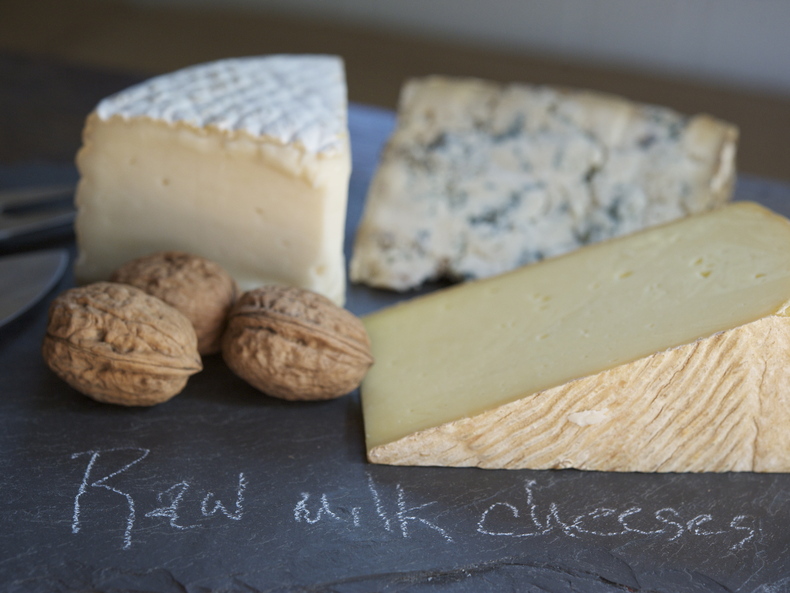
I can't take credit for that: my friend Louise told me about a Rawesome food co-op in Venice, California, that sells raw milk—she's going there to stock up! I feel like the Pied Piper of natural dairy. Love it. I'm jealous because they sell raw butter there. The farm I buy from doesn't separate the cream from the milk and I haven't quite figured out how to do that successfully. Every source says you just wait for it to rise to the top and skim it off, but that seems to leave me with something more like half-&-half. Any thoughts? Raw cheese, on the other hand, is pretty easy to find—as long as it's aged. I guess they figure any harmful bacteria will have died off, so by law raw milk cheeses have to be aged at least 60 days to be considered fit for human consumption. Whatever. You know I'll get my hands on some fresh raw milk cheese very soon. Thinking about making my own mozzarella. Yep, I'm a radical. (By the way, did I ever tell you that my father contracted bovine tuberculosis in Mexico when he was 19? Saved him from going into the service during WWII! Nowadays, even mom-&-pop farms do regular testing to make sure that doesn't happen.) So I did pick up some raw milk cheeses at Lucy's Whey in the Chelsea Market this week. I sampled them for lunch today and they were truly delicious. (I also picked up that lovely tray from Brooklyn Slate. Great packaging; would make a nice housegift for some cheese-loving host.)
Read More...
Read More...
5.4.10 Discover Cardoons
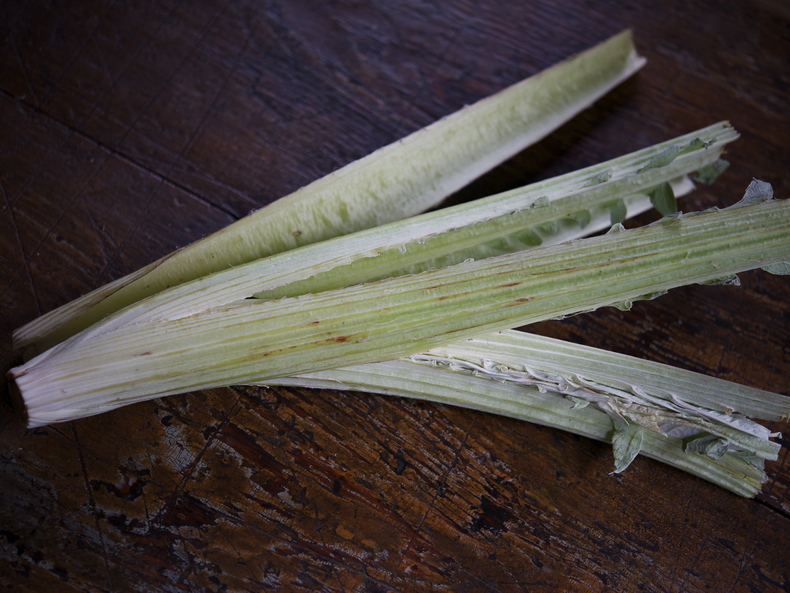
This cardoon looks a lot like celery after some very hard living, but it’s actually from the artichoke family—Cynara cardunculus. You may recognize its linguistic similarity to Cynar, the Italian artichoke-based bitter aperitivo also produced by Campari. The plant is a perennial with silvery-green leaves and edible stalks that can grow up to 7’ tall. It has some sharp, almost razor-like edges that you don’t really want to brush up against. When the plant flowers, the blossom looks like a large purple thistle. Though it’s often regarded as a nuisance weed in North America, other more civilized cultures have long regarded it as good eating. When the Italians grow it, they bend the young stalks down to the ground and bury them in the earth. This blanches the stalks, reducing bitterness and making them so tender they’re even served raw with bagna cauda or a similar achovy-based sauce. Cardoons are also delicious fried or made in classic Roman style, blanketed with a buttery bechamel sauce, as in my recipe below.
Read More...
Read More...